
That fuzzy patch on your baseboard or the powdery film along a wooden windowsill can be hard to identify at a glance, yet knowing what you are dealing with changes everything about how you respond. Understanding mildew vs mold on wood is more than an academic exercise, because the wrong cleaning approach can spread spores, damage the surface, or leave a deeper problem festering beneath what looks like a minor surface stain. If the growth has already traveled into framing or subfloor, you may need professional damage restoration services in Philadelphia and its surrounding cities rather than a weekend scrub-down.
At Quantum Restoration, we get calls every week from homeowners who assumed a discolored board was harmless, only to discover moisture had been feeding growth for months. The good news is that with a few simple observations, you can usually tell the two apart before you reach for a cloth. This guide walks you through the differences, why they matter, and how to clean safely.
What Mildew and Mold Actually Are
Both mildew and mold are types of fungi, and both thrive in damp, humid conditions. That shared origin is exactly why people confuse them. The key distinction is how they grow and how deeply they penetrate. Mildew tends to stay on the surface, feeding on moisture and organic residue sitting on top of the wood. Mold, on the other hand, can send root-like structures called hyphae down into porous materials like wood, which is why it is so much harder to remove completely.
When you are weighing mildew vs mold on wood, think of mildew as a guest lingering on the doorstep and mold as an intruder that has moved into the walls. One is a nuisance you can often wipe away. The other signals a moisture problem that may already be compromising the structure of your home.
How to Tell Them Apart Before You Clean
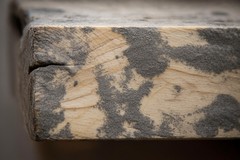
You can often identify what you are facing using sight, texture, and smell. Mildew usually appears as a flat, powdery or fluffy patch that is white, gray, or sometimes a pale yellow. It sits on the surface and can look almost dusty. Mold tends to be more varied and more alarming in appearance. It often shows up as green, black, blue, or even reddish spots, and it frequently has a slimy or raised, fuzzy texture rather than a dry powder.
Smell is another reliable clue. Mildew carries a mild, musty odor similar to a damp towel left in a gym bag. Mold produces a stronger, earthier, more pungent smell that many people describe as pervasive and hard to ignore. If an entire room smells musty even after you clean a visible spot, that is a strong sign the growth runs deeper than the surface.
Here is a quick comparison to keep in mind when you are inspecting wood around your home:
- Mildew: flat and powdery, white to gray, mild musty odor, stays on the surface, usually wipes off.
- Mold: fuzzy or slimy, green, black, or multicolored, strong earthy smell, penetrates the wood, often returns after cleaning.
One important caveat: a visual check is a starting point, not a diagnosis. Some molds are relatively harmless while others, including certain black molds, can pose real health concerns. When in doubt, treat an unknown growth as mold and proceed with caution.
Why the Difference Matters for Your Home
The reason the mildew vs mold on wood question is worth answering before you clean comes down to both safety and structural integrity. Mildew is largely a cosmetic and surface problem. Left unchecked it is unpleasant, but it rarely threatens the wood itself. Mold is a different story. Because it feeds on the cellulose in wood and anchors itself below the surface, it can weaken joists, studs, and flooring over time. That slow degradation is one of the quietest ways a home loses value and safety.
There is also the health angle. Prolonged exposure to mold spores can aggravate allergies, trigger respiratory irritation, and cause problems for people with asthma or weakened immune systems. If you notice symptoms that ease when you leave the house and return when you come home, your indoor environment may be sending you a message. Nearly every mold issue traces back to a moisture source, which is why addressing leaks and humidity is just as important as cleaning the visible growth. Our team often pairs mold work with water damage restoration in the Phildelphia area, because unresolved moisture almost guarantees the problem comes back.
Cleaning Mildew Safely
If you have confidently identified mildew on a nonporous or sealed wood surface, you can usually handle it yourself. Ventilate the area, wear gloves and a mask, and avoid dry-brushing, which only launches spores into the air. A solution of mild detergent and water works for many light cases, and you should dry the surface thoroughly afterward so moisture does not invite a return visit.
Resist the urge to simply paint over discoloration or mask the smell with air fresheners. Covering the problem does nothing to remove the fungus or fix the underlying dampness. After cleaning, keep an eye on the spot for a week or two. If it comes back quickly, you are likely dealing with something more stubborn than surface mildew.
When to Call a Professional
Some situations call for expert help rather than a DIY approach. If the affected area is larger than roughly a few square feet, if the growth keeps returning, if it has spread into framing or drywall, or if anyone in the home is experiencing health symptoms, it is time to bring in a specialist. The same is true when you cannot find or stop the moisture source, because cleaning without solving the cause is a losing battle.
Professional remediation does more than wipe away what you can see. Trained technicians locate hidden growth, contain the area to prevent spore spread, remove compromised materials safely, and address the moisture that started it all. You can learn more about our full approach to mold removal in Philadelphia and the surrounding citiesl and how we protect both your home and your family during the process.
We also provide mold removal and remediation in Conshohocken and the surrounding areas. Whatever the size of the problem, a proper inspection removes the guesswork that makes the mildew vs mold on wood question so frustrating in the first place.
Telling the two apart often comes down to a handful of clues: texture, color, odor, and whether the growth returns after you clean it. Mildew stays on the surface and usually responds to simple cleaning, while mold digs in, smells stronger, and demands a more serious response. When you understand those differences, you can act quickly and avoid the mistake of treating a structural threat like a cosmetic blemish.
If you are staring at a suspicious patch and cannot decide what it is, do not gamble with your home or your health. Reach out to Quantum Restoration for a professional assessment, and let our team help you clean it up the right way the first time.